TPMS Technology Centre
TPMS sensor faults in Didim: reading, programming and relearn
A tyre pressure warning can mean a genuinely low tyre, or a problem with the sensor itself. We tell the two apart, read the sensors with a diagnostic tool and, where needed, program a suitable sensor and teach it to your car.
- Sensor reading
- Programming
- Relearn
- Sensor replacement
What is TPMS?
TPMS (Tyre Pressure Monitoring System) warns the driver when tyre pressure drops. It shows pressure loss you can’t see: low pressure lengthens braking distances, heats the tyre and wears it out.
There are two kinds. If you don’t know which your car has, that’s fine; the make, model and year tell us.
Direct (sensor-based) TPMS
Each wheel has a battery-powered sensor, usually combined with the valve, sending pressure and temperature to the car wirelessly. The battery is sealed inside; when it runs out the sensor is usually replaced.
Indirect (sensorless) TPMS
There’s no sensor in the wheel. The car compares wheel speeds through the ABS sensors to estimate pressure loss. After setting the pressures, the system is reset from the car’s menu.
Why does the TPMS light come on?
How the light behaves is the first clue to whether the problem is the tyre or the system. The real answer only comes after measuring and reading the sensors.
Stays on
Usually one or more tyres are low on pressure.
Stop somewhere safe and look at the tyres; if one is clearly flat, don’t drive on it — call us.
Flashes first, then stays on
On many cars this points to a fault in the system itself: a flat sensor battery, a damaged sensor, or a sensor the car hasn’t learned.
The light stays on even with correct pressures; check them by hand until it’s inspected.
Came on after new tyres or wheels
If the new wheels have no sensors, the sensors weren’t taught to the car, or a sensor was damaged during fitting, the warning can come on.
Tell us which wheels are fitted and when they were changed.
How to spot a faulty sensor
These signs can point to a sensor problem, but the same signs can also come from pressure loss. That’s why we measure the pressure first and read the sensor second.
- One tyre shows “- -” or no reading on the dashboard
- The warning stays on even though the pressures are correct
- The warning flashes first, then stays on
- One wheel’s reading makes no sense compared with the others
- The valve stem is broken, cracked or corroded
- The warning started right after a wheel or tyre change
What we do
With our TPMS service tool we can read sensors one by one, program suitable sensors and carry out the relearn. Which step your car needs depends on the car and the reading.
Sensor reading and check
The sensor’s signal, ID, battery status and pressure data are read with the tool.
Sensor programming
A programmable sensor is set up with the right protocol for your car, or the old sensor’s ID is copied.
Relearn
A new or moved sensor is taught to the car. The method depends on the make: with the tool, from the car’s menu, or by driving.
Sensor replacement
A sensor with a flat battery or damage is replaced with the tyre removed; the sensor and valve are checked during fitting.
How it works
Pressure check
All four tyres, and the spare if there is one, are measured. Any leak is dealt with first.
Sensor reading
Each sensor is read with the TPMS tool, so it’s clear whether the problem is the tyre or the sensor.
Fix and verify
Relearn, programming or replacement as needed; then we check that all four tyres read on the dashboard.
A real job
Sensor replacement on an Opel
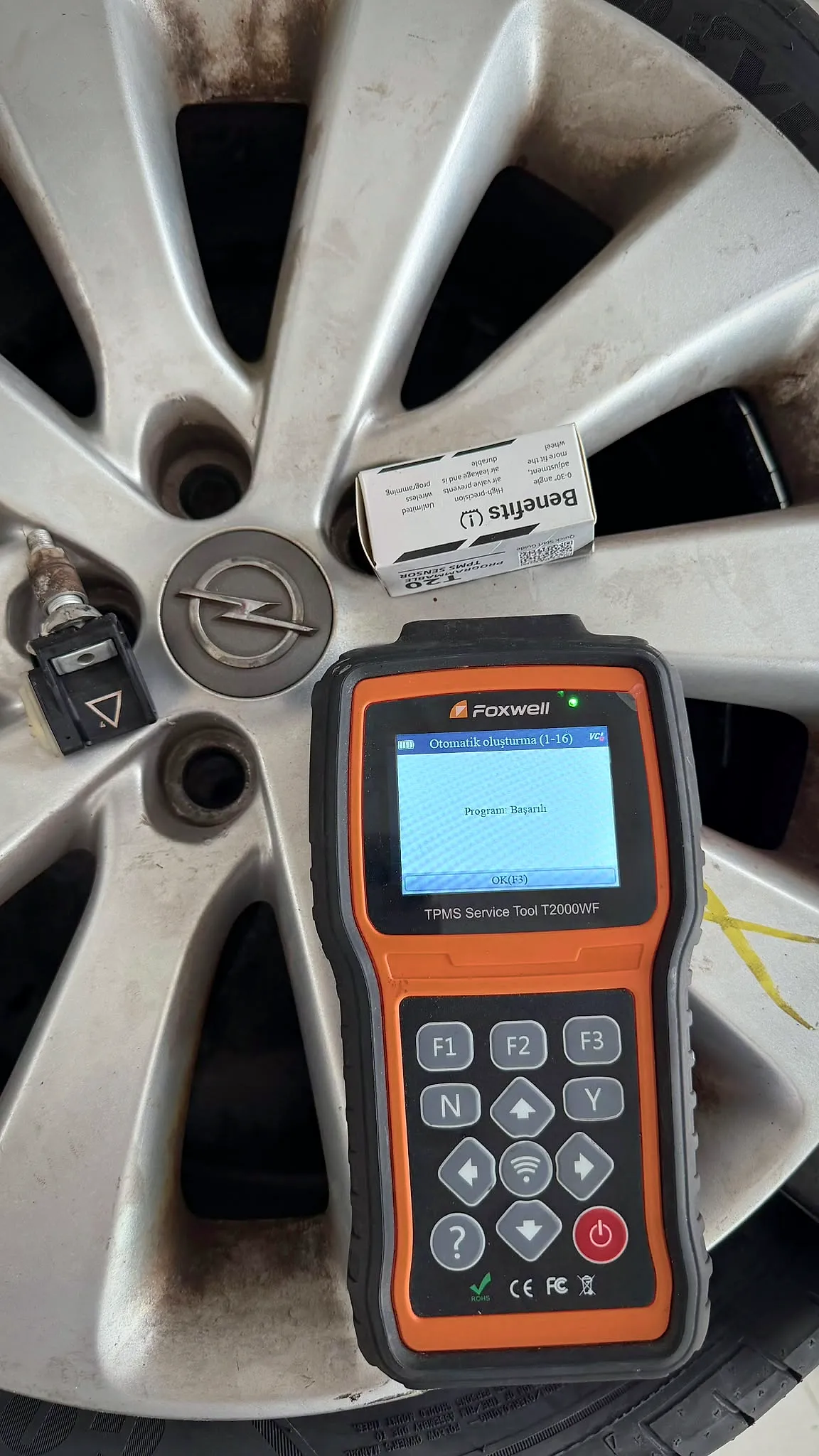
The rear right tyre showed no reading and the warning light wouldn’t go off. The sensor was checked with the tool, replaced with a programmable sensor and taught to the car. Afterwards, all four tyres are read.
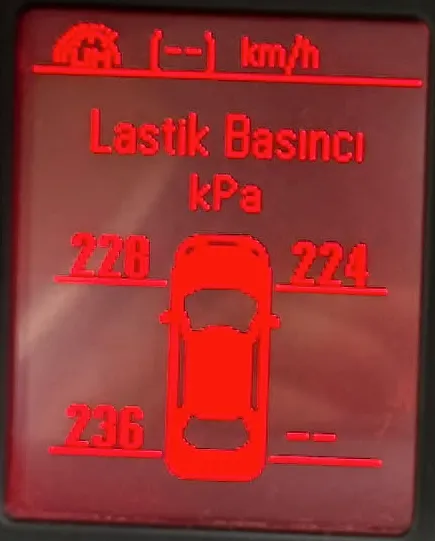
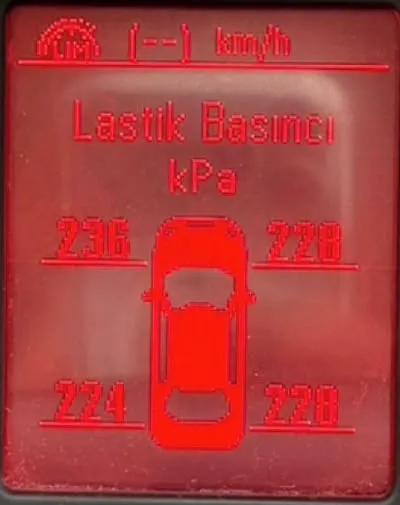
Photos belong to ARAS OTOMOTİV; only light and colour were corrected.
Vehicle compatibility
Not every car or sensor is the same. Sensor frequency (usually 433 MHz or 315 MHz), protocol and relearn method vary by make, model and year. Some cars need a specific drive cycle or menu procedure to learn sensors.
So we don’t make firm promises over the phone: once we have your car’s details, we’ll work out together whether we can look at it on the spot or at the shop, and what may be needed. The definite answer comes after the sensors are read with the tool.
We don’t diagnose faults through the website or over the phone. This page is general guidance; we can only tell you what’s wrong with your car after measuring and reading the sensors.
Have this ready when you call
- Car make, model and year
- Is the light on steadily or flashing?
- Which tyre shows no reading?
- Have the tyres or wheels been changed recently?
Common questions
See all questionsCan I keep driving with the TPMS warning on?
Stop somewhere safe and look at the tyres first. If a tyre is visibly low or you’re unsure about the pressures, don’t drive on it. If the pressures are right and the light flashes then stays on, it’s usually a system fault; check the pressures by hand regularly until it’s inspected.
Can the sensor battery be replaced?
In most TPMS sensors the battery is sealed inside and can’t be replaced separately. When it runs out, the sensor is replaced.
Does a new sensor need to be taught to the car?
On most cars, yes. The new sensor’s ID must be learned by the car, or a compatible sensor programmed with the old one’s ID. Some cars learn the sensor by themselves after a short drive. The method varies by make.
Can you work on my car’s TPMS?
It depends on the make, model year and sensor type. Tell us the make, model and year and we’ll work out together whether we can look at it on the spot or at the shop.
Related pages
Stuck at the roadside?
Call us or send your location on WhatsApp and we’ll tell you how we can help.